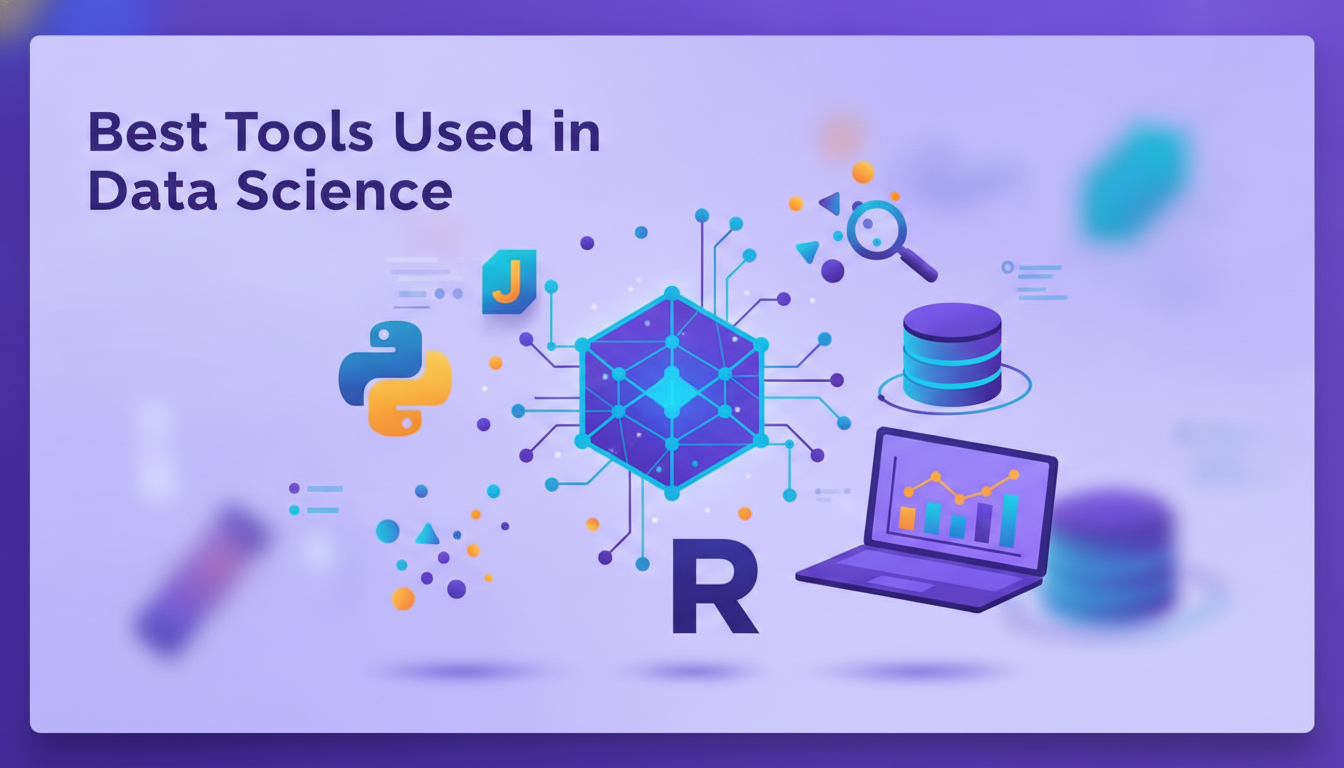
Best Tools Used in Data Science
Best Tools Used in Data Science in 2026
Data Science has become one of the most important technologies driving Artificial Intelligence, automation, business analytics, and decision-making. Modern Data Scientists use a wide range of tools for data analysis, Machine Learning, visualization, cloud computing, and AI model deployment.
Choosing the right Data Science tools can improve productivity, simplify workflows, and help build powerful AI-driven solutions.
This guide covers the best tools used in Data Science in 2026 and explains how they are used in real-world projects.
For learners looking for expert guidance, live mentoring, and practical Data Science training, explore Tutorac Data Science Tutors.
Why Data Science Tools Are Important
Data Science projects involve multiple stages:
- Data collection
- Data cleaning
- Analysis
- Visualization
- Machine Learning
- Model deployment
Different tools are used for different tasks to improve efficiency and scalability.
Modern businesses rely heavily on AI, analytics, and cloud-based systems.
Top Programming Languages Used in Data Science
- Python
Python is the most popular programming language in Data Science.
It is beginner-friendly, flexible, and supported by thousands of libraries.
Why Python is Popular
- Easy syntax
- Large ecosystem
- Strong community support
- Widely used in AI & Machine Learning
Popular Python Libraries
Category | Libraries |
Data Analysis | Pandas |
Numerical Computing | NumPy |
Visualization | Matplotlib, Seaborn |
Machine Learning | Scikit-learn |
Deep Learning | TensorFlow, PyTorch |
Example:
import pandas as pd
data = pd.read_csv(“data.csv”)
print(data.head())
Python dominates AI and Machine Learning because of its simplicity and ecosystem. (python.org)
For personalized Python and Data Science mentoring, visit Tutorac Data Science Tutors.
- R Programming
R is another powerful language used for statistics and data analysis.
Best For
- Statistical analysis
- Data visualization
- Research projects
Popular R Libraries
- ggplot2
- dplyr
- caret
R is especially popular in research and academic environments.
Best Data Analysis Tools
- Pandas
Pandas is one of the most important Python libraries for Data Science.
Used For
- Data cleaning
- Data manipulation
- Data analysis
- CSV and Excel processing
Key Features
- Fast data handling
- Structured datasets
- Easy filtering and grouping
- NumPy
NumPy is used for numerical and scientific computing.
Features
- Array operations
- Mathematical calculations
- Matrix operations
NumPy is the foundation of many Machine Learning libraries.
Best Data Visualization Tools
Visualization helps convert complex data into understandable insights.
- Matplotlib
Matplotlib is one of the most widely used Python visualization libraries.
Used For
- Line charts
- Bar graphs
- Histograms
- Scatter plots
- Seaborn
Seaborn is built on top of Matplotlib and provides advanced visualization capabilities.
Advantages
- Attractive charts
- Statistical visualizations
- Easy customization
- Tableau
Tableau is one of the best business intelligence and visualization tools.
Features
- Drag-and-drop dashboards
- Interactive visualizations
- Business reporting
Tableau is widely used in business analytics and enterprise reporting. (tableau.com)
- Power BI
Power BI is a popular Microsoft business analytics platform.
Advantages
- Real-time dashboards
- Data reporting
- Business analytics integration
Power BI is heavily used in enterprise reporting systems. (microsoft.com)
Best Machine Learning Tools
- Scikit-learn
Scikit-learn is one of the most popular Machine Learning libraries in Python.
Used For
- Classification
- Regression
- Clustering
- Model evaluation
Advantages
- Beginner-friendly
- Powerful algorithms
- Excellent documentation
Scikit-learn is widely used for Machine Learning education and industry projects.
- TensorFlow
TensorFlow is an open-source Deep Learning framework developed by Google.
Used For
- Neural networks
- AI applications
- Deep Learning models
Applications
- Computer vision
- NLP
- Generative AI
TensorFlow powers many modern AI systems. (tensorflow.org)
- PyTorch
PyTorch is another leading Deep Learning framework.
Advantages
- Flexible architecture
- Faster experimentation
- Research-friendly
PyTorch is highly popular in AI research and advanced Deep Learning projects. (pytorch.org)
Best Database Tools for Data Science
- SQL
SQL is essential for querying and managing structured data.
Important SQL Skills
- SELECT queries
- JOIN operations
- Aggregations
- Data filtering
SQL is one of the most important Data Science skills.
- MySQL
MySQL is a popular relational database system.
Used For
- Structured data storage
- Business applications
- Analytics systems
- MongoDB
MongoDB is a NoSQL database used for unstructured data.
Advantages
- Flexible schema
- Scalable architecture
- High performance
MongoDB is widely used in modern cloud-based applications.
Best Big Data Tools
- Apache Hadoop
Hadoop is used for distributed storage and processing of massive datasets.
Features
- Scalability
- Fault tolerance
- Distributed computing
- Apache Spark
Spark is a powerful Big Data processing engine.
Advantages
- Faster than Hadoop MapReduce
- Real-time analytics
- ML integration
Spark is widely used for large-scale data processing. (spark.apache.org)
Best Cloud Platforms for Data Science
Cloud computing is essential for modern Data Science workflows.
- Amazon Web Services (AWS)
AWS is one of the most popular cloud platforms.
Services Used in Data Science
- S3
- SageMaker
- Lambda
- EC2
AWS supports Machine Learning and AI deployment at scale. (aws.amazon.com)
- Microsoft Azure
Azure provides cloud solutions for AI and analytics.
Popular Services
- Azure Machine Learning
- Azure Data Factory
- Power BI integration
- Google Cloud Platform (GCP)
GCP is widely used for AI and Data Analytics.
Popular Services
- BigQuery
- Vertex AI
- Cloud Storage
Google Cloud provides powerful AI infrastructure and analytics tools. (cloud.google.com)
Best Tools for MLOps & Deployment
- Docker
Docker helps package applications into containers.
Benefits
- Easy deployment
- Consistent environments
- Scalability
- Kubernetes
Kubernetes manages containerized applications at scale.
Used For
- Deployment automation
- Scaling
- Container orchestration
- Git & GitHub
Version control is essential for collaboration and project management.
Learn
- Git commands
- Repository management
- Branching
Create your portfolio using:
Best IDEs & Development Environments
- Jupyter Notebook
Jupyter Notebook is one of the most widely used Data Science environments.
Features
- Interactive coding
- Data visualization
- Experiment tracking
- VS Code
VS Code is a lightweight and powerful code editor.
Advantages
- Extensions support
- Python integration
- Git integration
- PyCharm
PyCharm is a professional IDE for Python development.
Features
- Debugging tools
- Code suggestions
- Project management
Best AI & NLP Tools
- OpenAI APIs
OpenAI APIs are widely used for Generative AI applications.
Applications
- AI chatbots
- Content generation
- Language translation
Generative AI tools are transforming Data Science workflows.
- Hugging Face
Hugging Face provides powerful NLP models and AI tools.
Used For
- Transformers
- NLP applications
- AI model deployment
Hugging Face is one of the most popular AI communities in 2026.
Best Tools for Beginners in Data Science
If you are starting Data Science, begin with:
Beginner-Friendly Tools |
Python |
Pandas |
NumPy |
Matplotlib |
SQL |
Jupyter Notebook |
These tools provide a strong foundation before moving to advanced AI systems.
How to Choose the Right Data Science Tools
Choose tools based on:
- Career goals
- Project requirements
- Industry demand
- Skill level
Example
Career Goal | Recommended Tools |
Data Analyst | SQL, Power BI, Tableau |
AI Engineer | TensorFlow, PyTorch |
ML Engineer | Scikit-learn, Spark |
Data Engineer | Hadoop, Kafka |
Future of Data Science Tools
Data Science tools continue evolving because of growth in:
- Artificial Intelligence
- Generative AI
- Cloud Computing
- Automation
- Big Data Analytics
AI-powered analytics platforms are becoming the future of modern businesses.
Final Thoughts
Data Science tools are essential for analytics, Machine Learning, AI development, and business intelligence. Beginners should start with Python, SQL, Pandas, and visualization tools before moving toward advanced AI and cloud technologies.
Mastering the right tools can significantly improve your career opportunities and project capabilities.
For personalized mentoring, project assistance, and live training, explore Tutorac Data Science Tutors.
FAQs
Which tool is best for Data Science beginners?
Python, Pandas, SQL, and Jupyter Notebook are excellent tools for beginners.
Is Python necessary for Data Science?
Yes, Python is the most widely used programming language in Data Science.
Which visualization tool is better: Tableau or Power BI?
Both are excellent. Tableau is popular for advanced visualization, while Power BI integrates well with Microsoft products.
Which Deep Learning framework is best?
TensorFlow and PyTorch are the most popular Deep Learning frameworks in 2026.
Where can I learn Data Science tools with mentorship?
You can get live tutoring and practical guidance through Tutorac Data Science Tutors.
















Add a comment