
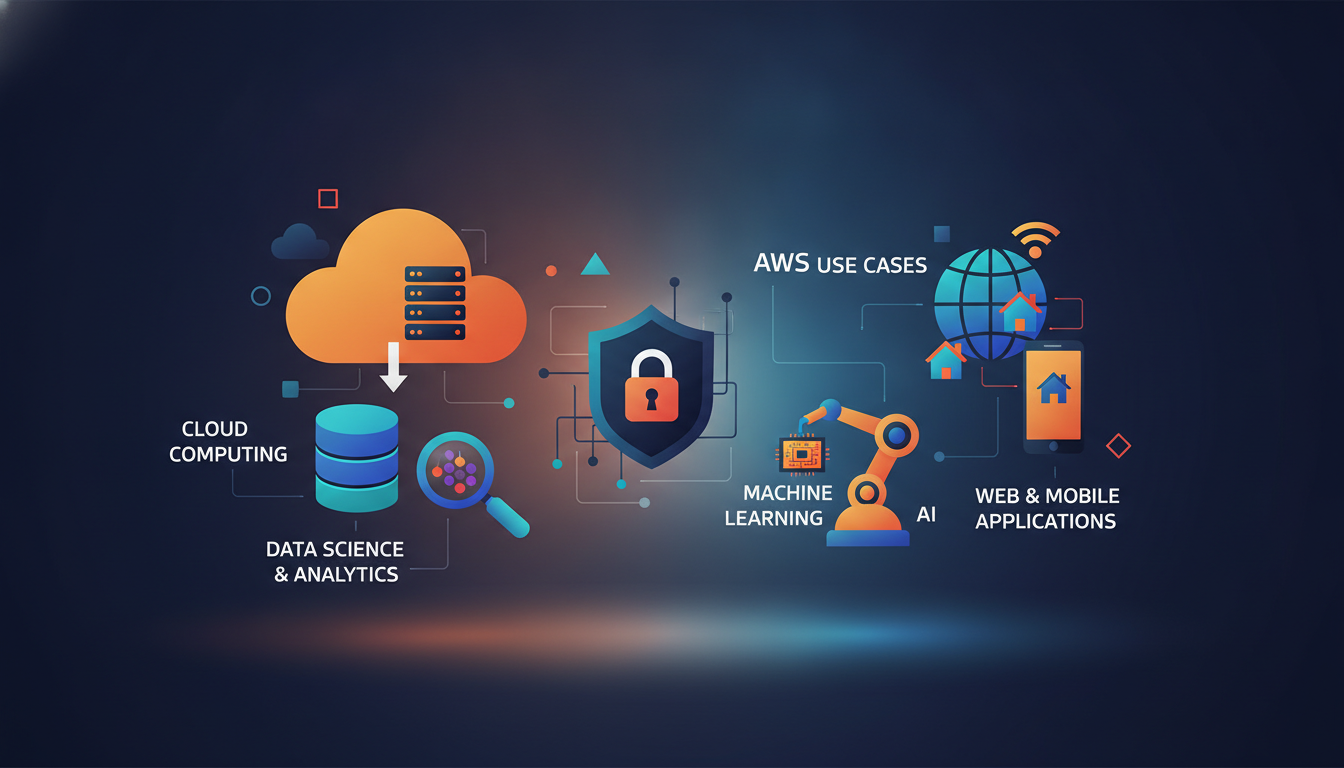
What is AWS Used For?
What is AWS Used For?
Amazon Web Services is the world’s leading cloud computing platform developed by Amazon.
AWS provides cloud-based services that help businesses and developers build, deploy, manage, and scale applications without maintaining physical servers.
Today, AWS is used by:
- Startups
- Enterprises
- Government organizations
- E-commerce companies
- AI platforms
- Streaming services
- SaaS businesses
AWS powers millions of websites, mobile apps, cloud infrastructures, and AI systems globally.
For learners looking for cloud mentoring and practical AWS guidance, explore Cloud Computing Essentials Tutors.
What is Cloud Computing?
Cloud computing means accessing computing resources through the internet instead of using local physical servers.
AWS allows users to access:
- Virtual servers
- Databases
- Storage
- Networking
- AI tools
- Security systems
Cloud computing helps businesses scale quickly and reduce infrastructure costs. (aws.amazon.com)
Main Uses of AWS
AWS is used for many different purposes across industries.
- Website Hosting
One of the most common uses of AWS is hosting websites and web applications.
Businesses use AWS to host:
- Company websites
- Blogs
- E-commerce platforms
- SaaS applications
Popular AWS Hosting Services
Service | Purpose |
EC2 | Virtual servers |
S3 | Static website hosting |
Lightsail | Simplified hosting |
CloudFront | CDN delivery |
AWS hosting is scalable, reliable, and globally distributed.
- Cloud Storage
AWS provides highly scalable cloud storage services.
Amazon S3
Amazon S3 is one of the most widely used cloud storage systems.
Used For
- File storage
- Backups
- Media hosting
- Data lakes
- Archive storage
S3 offers high durability and scalability for businesses.
- Running Virtual Servers
AWS allows businesses to launch virtual machines using EC2.
Amazon EC2
EC2 stands for Elastic Compute Cloud.
EC2 is Used For
- Hosting applications
- Running backend systems
- Testing environments
- Enterprise workloads
EC2 eliminates the need for expensive physical servers.
- Application Development
Developers use AWS to build and deploy applications quickly.
AWS Supports
- Web applications
- Mobile applications
- APIs
- SaaS products
AWS provides scalable infrastructure for modern software development.
- Database Management
AWS offers managed database services.
Popular AWS Database Services
Service | Database Type |
RDS | Relational databases |
DynamoDB | NoSQL database |
Aurora | High-performance database |
AWS databases reduce server maintenance and improve scalability.
- Backup & Disaster Recovery
AWS helps businesses secure and recover important data.
AWS Backup Use Cases
- Cloud backups
- Disaster recovery
- Data redundancy
- Business continuity
Cloud backup systems improve reliability and data protection.
- Artificial Intelligence & Machine Learning
AWS provides powerful AI and Machine Learning services.
Popular AWS AI Services
- SageMaker
- Rekognition
- Polly
- Lex
AWS AI services are used for:
- Chatbots
- Image recognition
- Voice systems
- Predictive analytics
AI-powered cloud computing is growing rapidly in 2026.
For cloud and AI mentoring, explore Cloud Computing Essentials Tutors.
- Big Data & Analytics
AWS helps businesses analyze large datasets.
AWS Analytics Services
- Redshift
- Athena
- EMR
- Kinesis
These services are used for:
- Business intelligence
- Data analytics
- Real-time processing
Big Data processing is one of AWS’s major use cases.
- DevOps & Automation
AWS supports DevOps workflows and automation.
Popular DevOps Services
Service | Purpose |
CodePipeline | CI/CD pipelines |
CloudFormation | Infrastructure automation |
Elastic Beanstalk | App deployment |
AWS DevOps tools improve deployment speed and efficiency.
- Serverless Computing
AWS supports serverless application development.
AWS Lambda
AWS Lambda runs code without managing servers.
Benefits
- Auto scaling
- Lower costs
- Faster deployment
Serverless computing is widely used in modern applications.
- Networking & Content Delivery
AWS offers networking services for global applications.
Popular Networking Services
- VPC
- Route 53
- CloudFront
Used For
- DNS management
- CDN delivery
- Private cloud networks
AWS networking services improve application performance and security.
- Security & Identity Management
AWS provides enterprise-grade cloud security.
Security Services
- IAM
- Shield
- WAF
- GuardDuty
AWS security tools help protect applications and user data.
- Mobile Application Backend
AWS helps developers create mobile app backends.
Mobile Use Cases
- Authentication
- Push notifications
- APIs
- Cloud storage
AWS supports Android and iOS application infrastructure.
- Media Streaming
Streaming companies use AWS for scalable media delivery.
AWS is Used For
- Video streaming
- Audio streaming
- Live broadcasting
AWS provides scalable infrastructure for streaming platforms.
- Gaming Applications
Gaming companies use AWS for scalable multiplayer systems.
AWS Gaming Use Cases
- Game servers
- Player analytics
- Multiplayer infrastructure
Cloud gaming continues growing rapidly.
Why Companies Use AWS
Businesses choose AWS because of:
- Scalability
- Global infrastructure
- Security
- Reliability
- Flexibility
- Cost optimization
AWS supports startups as well as large enterprises.
Advantages of AWS
Key Benefits
- Pay-as-you-go pricing
- High scalability
- Global availability
- Strong security
- Massive service ecosystem
AWS helps businesses reduce infrastructure management complexity.
Industries Using AWS
AWS is used across many industries.
Industries Include
- Healthcare
- Finance
- E-commerce
- Education
- Gaming
- Media
- Artificial Intelligence
Cloud adoption continues increasing globally.
Popular Companies Using AWS
Many major companies use AWS infrastructure.
Examples
- Netflix
- Airbnb
- Twitch
- Adobe
AWS powers many large-scale global applications.
AWS Career Opportunities
AWS skills are highly demanded worldwide.
Popular AWS Roles
- Cloud Engineer
- DevOps Engineer
- Solutions Architect
- Cloud Administrator
Cloud computing careers continue growing rapidly in 2026.
AWS Salary in India
Experience | Average Salary |
Fresher | ₹4–8 LPA |
Mid-Level | ₹10–20 LPA |
Experienced | ₹30+ LPA |
AWS-certified professionals often receive higher salaries.
Best AWS Certifications for Beginners
Recommended Certifications
- AWS Cloud Practitioner
- AWS Solutions Architect Associate
- AWS Developer Associate
AWS certifications improve credibility and cloud career opportunities.
Best Way to Learn AWS
Beginner Roadmap
- Learn cloud computing basics
- Understand Linux & networking
- Learn core AWS services
- Build cloud projects
- Learn DevOps & automation
Hands-on practice is essential for mastering AWS.
For live cloud mentoring, certification guidance, and AWS projects, explore Cloud Computing Essentials Tutors.
Future Scope of AWS
AWS continues growing because of demand for:
- Cloud infrastructure
- AI systems
- SaaS platforms
- DevOps automation
- Enterprise cloud migration
Cloud computing remains one of the fastest-growing technology industries.
Final Thoughts
AWS is used for hosting websites, running applications, cloud storage, AI systems, DevOps automation, databases, and enterprise cloud infrastructure.
It is one of the most important cloud platforms in modern technology and offers excellent career opportunities for developers, cloud engineers, and DevOps professionals.
Learning AWS can open doors to high-paying cloud computing careers in 2026.
FAQs
What is AWS mainly used for?
AWS is mainly used for cloud computing, hosting applications, storage, databases, AI services, and scalable infrastructure.
Is AWS difficult to learn?
AWS becomes easier with consistent practice and understanding of cloud fundamentals.
Which companies use AWS?
Many companies including Netflix, Airbnb, Adobe, and Twitch use AWS infrastructure.
Is AWS good for beginners?
Yes, AWS offers beginner-friendly certifications like AWS Cloud Practitioner.
Where can I learn AWS with mentorship?
You can get live tutoring, cloud projects, and certification guidance through Cloud Computing Essentials Tutors.
















Add a comment