
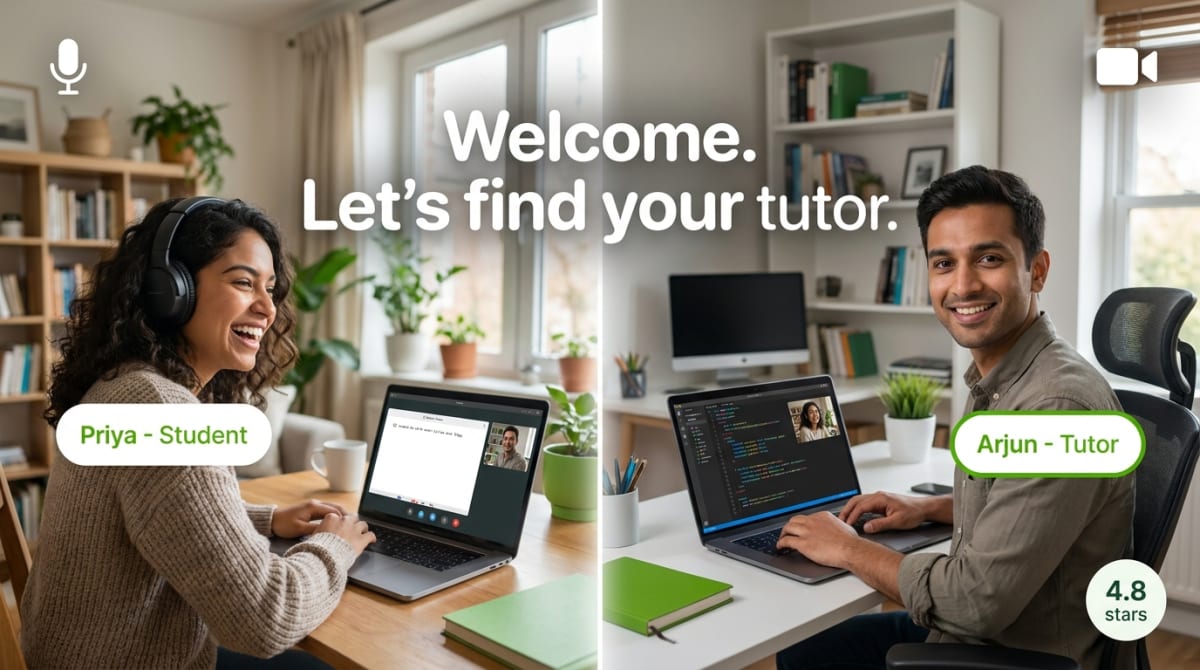
Tutoring Profile Tips (2026): Build a Profile That Converts
By Tutorac Editorial Team · Updated 8 July 2026
A tutoring profile that converts leads with a specific, outcome-focused headline, backs it with proof (reviews, results, credentials), shows a warm professional photo and a short intro video, states clear pricing, and ends with an easy next step. The goal is simple: help the right student decide “this is my tutor” in under 30 seconds.
Key takeaways
- Students skim, they don’t read. Your headline and photo do 80% of the conversion work before anyone reads your bio.
- Specificity beats breadth: “I help working professionals crack Python data-science interviews” converts far better than “I teach programming”.
- Proof is the deciding factor — reviews, student outcomes, and a short intro video outweigh a long list of qualifications.
- A profile is a landing page, not a resume. Every element should push the student toward booking a first session.
- Most low-converting profiles fail on the same three things: a vague headline, no photo or video, and no visible results.
Why your tutoring profile is really a sales page
On any marketplace, students compare five or ten tutors side by side in a single scroll. They are not evaluating who is most qualified — they are looking for the fastest signal that you can solve their specific problem. That reframing changes everything. A resume lists what you’ve done; a converting profile promises what the student will get. The tutors who fill their calendars aren’t always the most credentialed; they’re the ones who make the value obvious in seconds.
Every element below has one job: reduce the student’s risk and effort in choosing you. If a line doesn’t build trust or clarity, cut it.
The anatomy of a high-converting tutoring profile
Here is what each part of your profile is actually for, and what “good” looks like.
| Element | Its real job | What converts |
|---|---|---|
| Headline | Grab the right student in 3 seconds | Specific outcome + audience |
| Photo | Build instant trust | Warm, well-lit, face clearly visible |
| Intro video | Prove energy and clarity | 30–60s, benefit-led, friendly |
| Bio | Show you understand their problem | Student-focused, not self-focused |
| Proof | Remove doubt | Reviews, results, ratings |
| Pricing & offer | Set expectations | Clear rate + trial or first-session offer |
Write a headline that stops the scroll
Your headline is the single highest-leverage line on your profile. A generic one (“Experienced Maths and Science Tutor”) blends into every other result. A specific one signals fit instantly.
Use this formula: outcome + audience + credibility cue. Compare:
- Weak: “Python tutor with 5 years experience”
- Strong: “I help beginners land their first Python job — ex-Infosys engineer, 300+ students taught”
- Weak: “Web development classes”
- Strong: “Learn full-stack development by building real projects — from zero to portfolio in 12 weeks”
Notice the strong versions name who it’s for and what they get. That precision doesn’t shrink your audience — it makes the right students feel understood.
Choose a photo and intro video that build trust
A clear, friendly photo can lift response rates dramatically, yet many profiles use a blurry selfie, a logo, or no image at all. Use a well-lit headshot where your face fills the frame and you’re smiling naturally. Neutral background, decent light from a window, phone camera at eye level — that’s enough.
An intro video is the biggest differentiator in 2026 because so few tutors record one. Keep it 30–60 seconds and structure it as: who you help, how you teach, and one specific result. Speak to the student (“If you’re struggling with…”) rather than reciting your CV. Students who watch a video arrive at the first session already trusting you, which lifts both booking and retention.
Write a bio that speaks to the student, not about you
The most common bio mistake is making it a monologue about your degrees. Flip it. Open with the student’s problem, then position yourself as the solution.
A simple structure that converts:
- Line 1 – the problem: “Most beginners quit coding because tutorials never show how the pieces fit together.”
- Line 2 – your approach: “I teach through small real projects, so every concept sticks because you’ve used it.”
- Line 3 – proof: “Over 4 years I’ve helped 200+ students go from zero to job-ready.”
- Line 4 – the invitation: “Book a trial session and we’ll map a plan around your goal.”
Keep it scannable — short paragraphs, no jargon. If a parent or a busy professional can grasp your value in one read, you’ve won.
Show proof: reviews, results, and ratings
Proof is what turns interest into a booking. When a student is choosing between you and three others, social proof breaks the tie. Prioritise it in this order:
- Outcomes — “helped a student go from 55% to 89% in board exams,” “3 students placed in product companies.” Specific numbers are magnetic.
- Reviews — even two or three genuine reviews outperform none. Early on, offer a discounted first batch of sessions in exchange for honest feedback.
- Ratings and session counts — visible volume (“500+ sessions”) signals reliability.
- Credentials — relevant, but as support, not the headline. “Ex-Amazon” or “IIT graduate” earns a glance; results earn the booking.
If you’re brand new, borrow credibility: mention your professional background, portfolio, or a free workshop you ran. For a full plan on winning those first students, see our guide on how to get tutoring students.
Set pricing and an offer that lowers the risk
Hiding your rate creates friction; stating it filters for serious students and builds trust. Pair a clear price with a low-risk entry point — a discounted or structured first session — so the student’s first “yes” is easy. Anchor higher-value packages next to single sessions so a multi-session plan looks like the sensible choice. If you’re unsure what to charge, our breakdown of how to price online tutoring walks through rates by subject and experience.
Profile mistakes that quietly kill conversions
- A vague, everything-to-everyone headline — the number-one reason good tutors get skipped.
- No photo or a low-quality one — students won’t book a faceless stranger.
- A bio that’s all about you — no mention of the student’s goal or pain.
- Zero proof — no reviews, no results, nothing to reduce risk.
- Hidden or unclear pricing — creates hesitation and drop-off.
- Typos and walls of text — they read as low effort, and effort is what students are buying.
Fix these six and most profiles see meaningfully more enquiries without any change in skill or price. According to Harvard Business Review research on first impressions, people judge warmth and competence within seconds — your profile has to win both fast.
A 15-minute profile refresh checklist
Don’t rebuild everything at once. Run this quick pass today and improve one element per week after.
- Rewrite your headline using outcome + audience + credibility.
- Swap in a bright, face-forward photo.
- Add or rewrite your first bio line to name the student’s problem.
- Add one concrete result or review.
- Make your price and first-session offer visible.
- Read it aloud once and cut any sentence that’s about you, not the student.
Then explore more tactics in our Teaching & Tutoring hub to keep improving.
Frequently asked questions
What should a tutoring profile headline say?
Lead with the outcome you deliver and who it’s for, plus a quick credibility cue — for example, “I help beginners land their first Python job, ex-Infosys engineer, 300+ students taught.” Specificity signals fit faster than a generic subject list.
Do I need an intro video on my tutoring profile?
It’s optional but highly recommended. A 30–60 second video where you speak to the student’s goal builds trust before the first session and is a strong differentiator because most tutors skip it.
How do I get reviews when I’m a brand-new tutor?
Offer a discounted first batch of sessions to your first few students in exchange for honest feedback, and lean on your professional background or portfolio as borrowed credibility until reviews accumulate.
Should I show my prices on my profile?
Yes. Visible pricing filters for serious students and builds trust, while hiding it adds friction. Pair a clear rate with a low-risk first-session offer to make the first booking easy.
How long should my tutoring bio be?
Short and scannable — around four to six tight lines. Open with the student’s problem, describe your approach, add one proof point, and end with an invitation to book.
Why is my tutoring profile not getting bookings?
The usual culprits are a vague headline, no photo or video, and no visible proof. Fix those three first; they account for most of the gap between profiles that convert and those that don’t.
Put your new profile in front of real students
Tutorac connects skilled tutors with learners actively searching for their subject. Create your profile, apply these tips, and start getting booked.
About the author
The Tutorac Editorial Team brings together experienced instructors and working tech professionals who teach and mentor on Tutorac. We publish practical, up-to-date guides to help learners pick the right courses, certifications, and career paths. Find a tutor or explore courses.
















Add a comment