
CI/CD Pipeline Explained
CI/CD Pipeline Explained for Beginners in 2026
CI/CD pipelines are one of the most important concepts in modern DevOps and software development. Companies use CI/CD pipelines to automate software building, testing, and deployment processes.
CI/CD helps teams:
- Deliver software faster
- Reduce manual errors
- Improve code quality
- Automate deployments
- Increase development efficiency
Modern cloud-native applications rely heavily on CI/CD automation.
This complete beginner guide explains CI/CD pipelines, how they work, popular tools, and why they are important in 2026.
For learners looking for live DevOps mentoring, automation projects, and cloud guidance, explore DevOps Tutors.
What is CI/CD?
CI/CD stands for:
- Continuous Integration (CI)
- Continuous Delivery/Deployment (CD)
CI/CD automates the software development lifecycle from code integration to production deployment. (redhat.com)
CI/CD is one of the core practices in DevOps.
What is Continuous Integration (CI)?
Continuous Integration is the process of automatically integrating code changes into a shared repository.
Developers frequently push code to version control systems like GitHub.
CI pipelines automatically:
- Build applications
- Run tests
- Detect bugs
- Validate code quality
CI helps identify issues early in development.
What is Continuous Delivery (CD)?
Continuous Delivery automates application release preparation.
After testing is completed, applications become ready for deployment.
Benefits
- Faster releases
- Reduced deployment risks
- Better reliability
Continuous Delivery still requires manual approval before production deployment.
What is Continuous Deployment?
Continuous Deployment automatically deploys applications to production after tests pass successfully.
Advantages
- Fully automated releases
- Faster software updates
- Improved DevOps efficiency
Continuous Deployment is highly common in modern SaaS and cloud-native systems.
What is a CI/CD Pipeline?
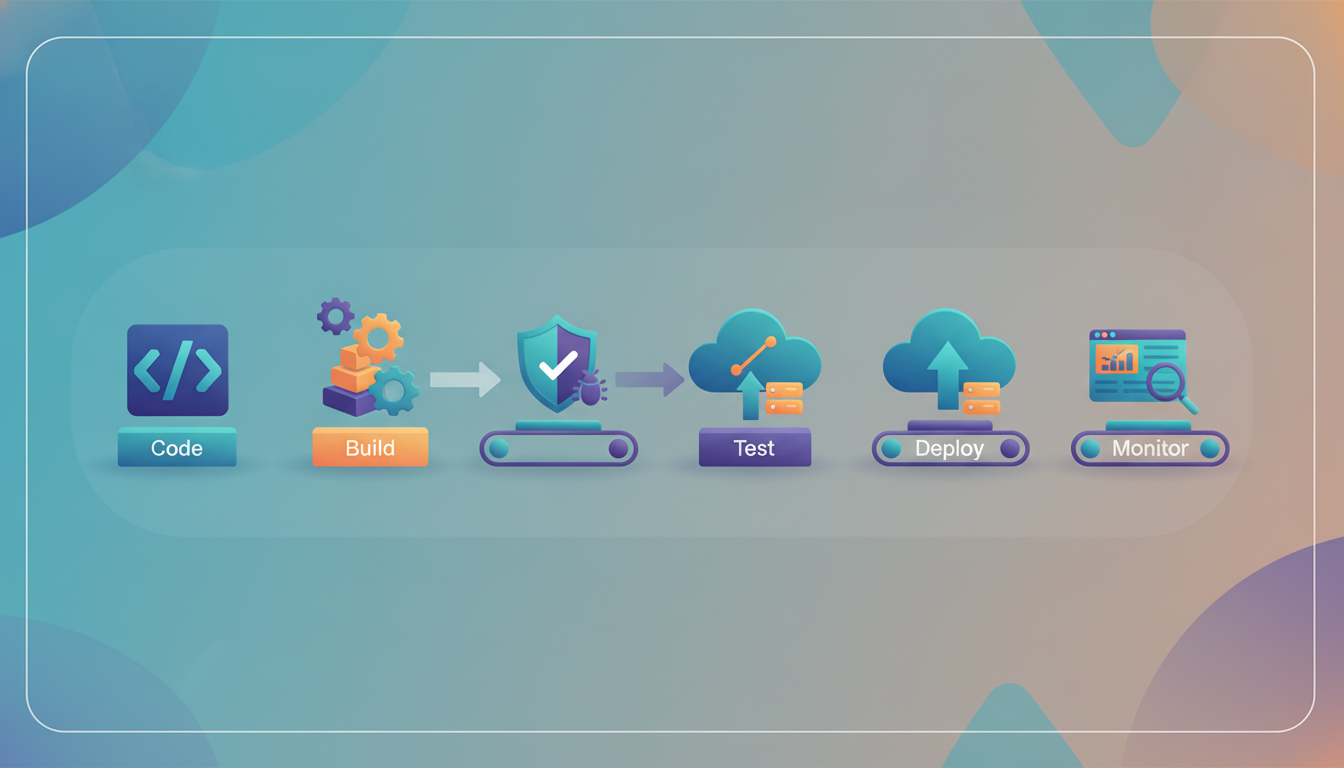
A CI/CD pipeline is an automated workflow that moves software through different stages of development and deployment.
Typical pipeline stages include:
- Code
- Build
- Test
- Deploy
- Monitor
CI/CD pipelines automate repetitive development tasks.
Why CI/CD Pipelines are Important
CI/CD pipelines improve software delivery speed and reliability.
Benefits of CI/CD
- Faster deployments
- Reduced human errors
- Automated testing
- Better collaboration
- Improved code quality
- Faster bug detection
Automation is one of the biggest advantages of DevOps workflows.
How a CI/CD Pipeline Works
Step 1: Developer Writes Code
Developers create or modify application code.
Example technologies:
- Java
- Python
- JavaScript
- Go
Step 2: Push Code to Git Repository
Code is pushed to version control systems like:
- GitHub
- GitLab
- Bitbucket
Git repositories trigger CI/CD workflows automatically.
Step 3: Build Process Starts
CI/CD tools automatically build the application.
Build Tasks Include
- Dependency installation
- Code compilation
- Packaging
Build automation improves development speed.
Step 4: Automated Testing
CI/CD pipelines run automated tests.
Common Tests
Test Type | Purpose |
Unit Testing | Validate functions |
Integration Testing | Verify components |
UI Testing | Test user interfaces |
Testing ensures application stability and quality.
Step 5: Deployment
After successful testing, applications are deployed.
Deployment Environments
- Development
- Staging
- Production
Deployment automation reduces downtime and deployment errors.
Step 6: Monitoring
After deployment, monitoring tools track:
- Application performance
- Errors
- Resource usage
Monitoring improves system reliability and troubleshooting.
CI/CD Pipeline Architecture
Basic CI/CD workflow:
Developer → Git Repository → CI/CD Tool → Build → Test → Deploy → Monitor
Automation occurs throughout the pipeline.
Popular CI/CD Tools
Several tools are used for CI/CD automation.
Tool | Purpose |
Jenkins | CI/CD automation |
GitHub Actions | Workflow automation |
GitLab CI/CD | Integrated DevOps |
CircleCI | Cloud CI/CD |
Azure DevOps | Enterprise pipelines |
CI/CD tools simplify automation and deployment workflows.
Jenkins CI/CD Pipeline
Jenkins is one of the most popular CI/CD tools.
Jenkins Features
- Open-source
- Plugin ecosystem
- Automation workflows
- Scalable pipelines
Jenkins is widely used in DevOps environments. (jenkins.io)
GitHub Actions
GitHub provides GitHub Actions for workflow automation.
Advantages
- Integrated with GitHub
- Easy setup
- Cloud-based workflows
GitHub Actions is highly popular among developers.
GitLab CI/CD
GitLab provides built-in CI/CD functionality.
Features
- Integrated DevOps workflows
- Pipeline automation
- Kubernetes integration
GitLab is widely used in enterprise DevOps systems.
CI/CD Pipeline Example
Example workflow:
- Developer pushes code
- Jenkins detects changes
- Application builds automatically
- Automated tests run
- Docker image is created
- Deployment occurs to Kubernetes
This automation improves software delivery speed significantly.
CI/CD and DevOps
CI/CD is one of the core pillars of DevOps.
DevOps focuses on:
- Automation
- Collaboration
- Continuous delivery
- Faster deployments
CI/CD pipelines are essential for modern DevOps workflows.
For hands-on DevOps projects and automation mentoring, explore DevOps Tutors.
CI/CD with Docker & Kubernetes
Modern CI/CD pipelines often use:
- Docker
- Kubernetes
Docker in CI/CD
Docker containers package applications consistently.
Benefits
- Portable deployments
- Environment consistency
- Faster builds
Kubernetes in CI/CD
Kubernetes automates:
- Container deployment
- Scaling
- Orchestration
Kubernetes is heavily used in cloud-native CI/CD systems.
CI/CD Best Practices
Recommended Best Practices
- Automate testing
- Use version control
- Monitor deployments
- Keep pipelines fast
- Use Infrastructure as Code
Efficient pipelines improve DevOps productivity.
Benefits of CI/CD Pipelines
Benefit | Description |
Faster Releases | Accelerated deployments |
Better Quality | Automated testing |
Reduced Errors | Automation reduces mistakes |
Improved Collaboration | Shared workflows |
Scalability | Supports large systems |
CI/CD improves software engineering efficiency significantly.
Challenges in CI/CD
CI/CD pipelines also have challenges.
Common Challenges
- Complex pipeline management
- Security issues
- Infrastructure costs
- Flaky tests
Proper DevOps practices help solve these issues.
CI/CD Career Opportunities
CI/CD skills are highly valuable in DevOps careers.
Popular Roles
- DevOps Engineer
- Site Reliability Engineer
- Cloud Engineer
- Platform Engineer
Automation skills are increasingly important in modern IT infrastructure.
CI/CD Salary in India
Experience | Average Salary |
Fresher | ₹4–8 LPA |
Mid-Level | ₹10–20 LPA |
Experienced | ₹30+ LPA |
Professionals with cloud and Kubernetes expertise often receive higher salaries.
Best Way to Learn CI/CD
Beginner Learning Path
- Learn Git & GitHub
- Learn Linux basics
- Learn Jenkins
- Learn Docker
- Learn Kubernetes
- Build automation projects
Hands-on practice is essential for mastering CI/CD.
For live DevOps mentoring and automation projects, explore DevOps Tutors.
Future of CI/CD
CI/CD continues evolving because of:
- Cloud-native applications
- Kubernetes adoption
- AI-driven automation
- DevSecOps
Automation will remain critical in modern software delivery.
Final Thoughts
CI/CD pipelines are essential in modern DevOps and cloud computing. They automate software building, testing, deployment, and monitoring, helping organizations deliver software faster and more reliably.
Learning CI/CD along with Docker, Kubernetes, Git, and cloud platforms can open excellent DevOps career opportunities in 2026.
FAQs
What does CI/CD stand for?
CI/CD stands for Continuous Integration and Continuous Delivery/Deployment.
Why are CI/CD pipelines important?
CI/CD pipelines automate software testing and deployment, improving speed and reliability.
Which tools are used for CI/CD?
Popular CI/CD tools include Jenkins, GitHub Actions, GitLab CI/CD, and CircleCI.
Is CI/CD part of DevOps?
Yes, CI/CD is one of the core practices in DevOps.
Where can I learn CI/CD with mentorship?
You can get live DevOps tutoring, automation projects, and CI/CD guidance through DevOps Tutors.
















Add a comment