
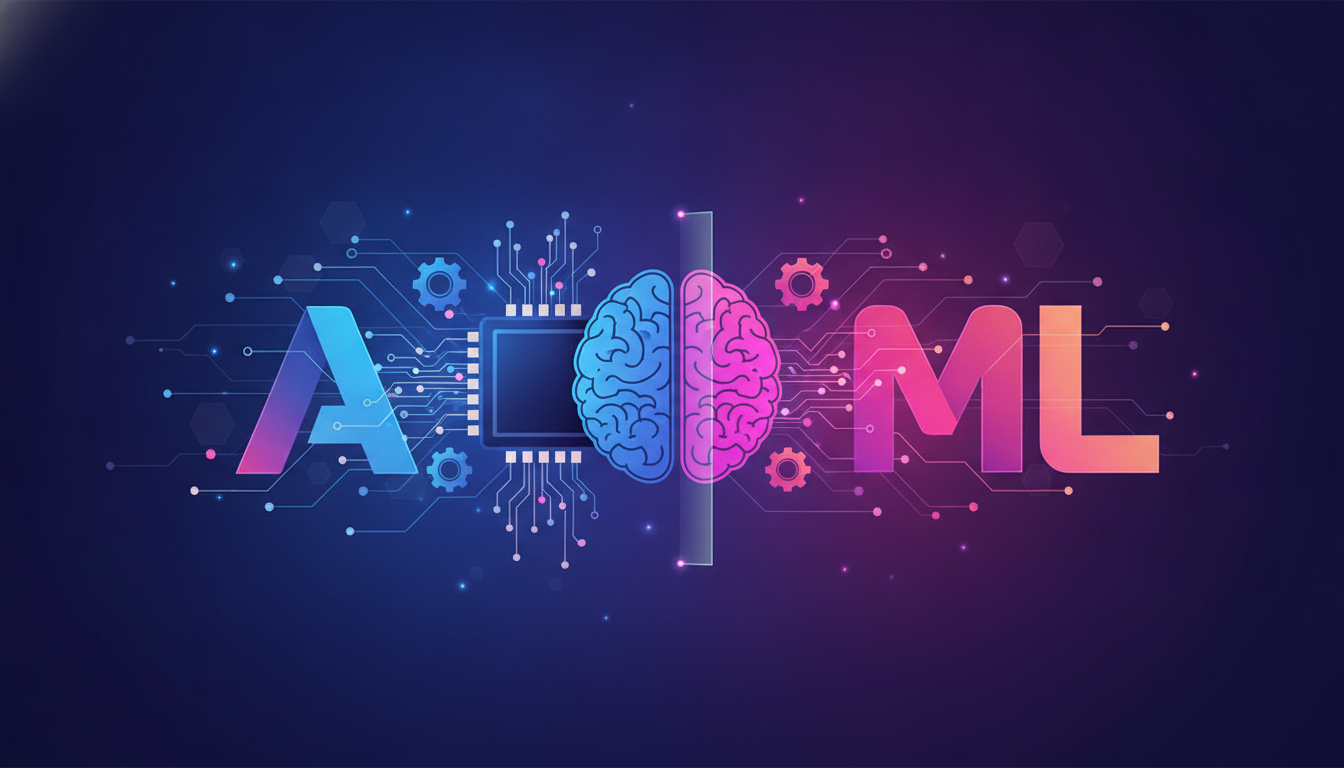
AI vs Machine Learning
AI vs Machine Learning: What’s the Difference in 2026?
Artificial Intelligence (AI) and Machine Learning (ML) are among the most popular technologies in the modern digital world. These technologies power chatbots, recommendation systems, voice assistants, automation tools, self-driving cars, and many other intelligent applications.
Although AI and Machine Learning are closely related, they are not the same.
This guide explains the difference between AI and Machine Learning, their applications, career opportunities, salary potential, and future scope in 2026.
For learners looking for live mentoring, practical projects, and personalized guidance, explore Tutorac Machine Learning Tutors.
What is Artificial Intelligence (AI)?
Artificial Intelligence is a broad field of computer science focused on creating machines that can simulate human intelligence.
AI systems are designed to:
- Learn from data
- Solve problems
- Make decisions
- Understand language
- Recognize images
- Automate tasks
AI aims to build intelligent systems capable of performing tasks that usually require human intelligence.
What is Machine Learning (ML)?
Machine Learning is a subset of Artificial Intelligence that enables systems to learn from data and improve automatically without explicit programming.
Instead of manually coding rules, ML systems learn patterns from data and make predictions or decisions.
Machine Learning is one of the most important technologies driving modern AI applications. (tensorflow.org)
AI vs Machine Learning: Simple Explanation
Artificial Intelligence
AI is the broader concept of creating intelligent machines.
Machine Learning
Machine Learning is a method used to achieve AI by training systems using data.
Simple Analogy
- AI is the complete system
- ML is one technique inside AI
Machine Learning is a subset of Artificial Intelligence.
AI vs Machine Learning: Key Differences
Feature | Artificial Intelligence (AI) | Machine Learning (ML) |
Definition | Simulation of human intelligence | Learning from data automatically |
Scope | Broad field | Subset of AI |
Goal | Create intelligent systems | Train models using data |
Data Dependency | Can work with or without large datasets | Highly data-dependent |
Learning | Multiple approaches | Primarily data-driven learning |
Applications | Robotics, NLP, automation | Prediction, classification |
Complexity | Broader and more complex | Narrower implementation |
Relationship Between AI and Machine Learning
Machine Learning is one part of Artificial Intelligence.
AI includes multiple technologies such as:
- Machine Learning
- Deep Learning
- Natural Language Processing
- Robotics
- Computer Vision
Machine Learning helps AI systems learn automatically from data.
Types of Artificial Intelligence
- Narrow AI
Focused on specific tasks.
Examples:
- Chatbots
- Recommendation systems
- Voice assistants
- General AI
AI capable of performing any human-level intellectual task.
This type of AI is still under development.
- Super AI
A theoretical AI system more intelligent than humans.
Currently, Super AI does not exist.
Types of Machine Learning
- Supervised Learning
Uses labeled data for training.
Examples:
- Spam detection
- Price prediction
- Unsupervised Learning
Finds patterns in unlabeled data.
Examples:
- Customer segmentation
- Clustering
- Reinforcement Learning
Learns using rewards and penalties.
Applications:
- Robotics
- Self-driving cars
- Game AI
Machine Learning systems improve performance by learning from experience and data.
AI vs Machine Learning: Real-World Applications
Artificial Intelligence Applications
Common AI Applications
- Virtual assistants
- Robotics
- Self-driving vehicles
- Smart automation
- AI chatbots
- Facial recognition
AI systems are transforming industries through automation and intelligent decision-making. (openai.com)
Machine Learning Applications
Common ML Applications
- Recommendation systems
- Fraud detection
- Predictive analytics
- Medical diagnosis
- Stock market prediction
Machine Learning powers predictive models and intelligent analytics systems.
AI vs Machine Learning in Daily Life
You use AI and ML every day without realizing it.
Examples
Application | Technology Used |
Netflix recommendations | Machine Learning |
ChatGPT | AI + ML |
Voice assistants | AI |
Email spam filters | Machine Learning |
Face unlock | AI + Computer Vision |
AI vs Machine Learning: Programming Languages
Popular Languages for AI & ML
- Python
- R
- Java
- Julia
Python is the most widely used language because of its simplicity and huge ecosystem. (python.org)
For guided AI and ML learning support, visit Tutorac Machine Learning Tutors.
Best Libraries for AI & Machine Learning
Category | Libraries |
Machine Learning | Scikit-learn |
Deep Learning | TensorFlow, PyTorch |
NLP | Transformers, NLTK |
Computer Vision | OpenCV |
These libraries simplify AI and Machine Learning development significantly.
AI vs Machine Learning: Career Opportunities
Both AI and Machine Learning offer excellent career opportunities.
AI Career Roles
Popular AI Jobs
- AI Engineer
- Robotics Engineer
- NLP Engineer
- Computer Vision Engineer
Machine Learning Career Roles
Popular ML Jobs
- Machine Learning Engineer
- Data Scientist
- ML Researcher
- AI Developer
AI and ML careers continue growing rapidly worldwide.
AI vs Machine Learning Salary in India
Role | Average Salary |
AI Engineer | ₹8–25 LPA |
Machine Learning Engineer | ₹6–22 LPA |
Data Scientist | ₹5–20 LPA |
Salary depends on:
- Experience
- Projects
- Skills
- Certifications
- Company
AI and ML specialists are among the highest-paid technology professionals.
AI vs Machine Learning: Which is Better?
Neither is “better” because they are interconnected.
Choose AI If You Like
- Robotics
- Automation
- Intelligent systems
- Human-like interactions
Choose Machine Learning If You Like
- Data analysis
- Predictive models
- Algorithms
- Pattern recognition
Most AI systems today heavily rely on Machine Learning.
AI vs Machine Learning: Future Scope
AI and Machine Learning will continue growing because of advancements in:
- Generative AI
- Automation
- Robotics
- Cloud computing
- Healthcare analytics
- Autonomous systems
AI-powered technologies are expected to dominate future industries and digital transformation.
Skills Required for AI & Machine Learning
Important Skills
- Python programming
- Mathematics
- Statistics
- Data analysis
- Deep Learning
- Cloud computing
Tools to Learn
- TensorFlow
- PyTorch
- Scikit-learn
- OpenCV
Hands-on project experience is critical for AI and ML careers.
Common Mistakes Beginners Should Avoid
Avoid These Mistakes
- Ignoring mathematics fundamentals
- Learning too many tools at once
- Skipping projects
- Copying code without understanding
- Avoiding deployment concepts
Best Resources to Learn AI & Machine Learning
Personalized Mentorship
For live tutoring, project guidance, and interview preparation, explore:
Tutorac Machine Learning Tutors
Final Thoughts
Artificial Intelligence and Machine Learning are closely connected technologies shaping the future of the digital world.
AI is the broader field focused on intelligent systems, while Machine Learning is a subset that enables systems to learn from data automatically.
Both fields offer exciting career opportunities, high salaries, and long-term growth potential in 2026 and beyond.
For personalized AI and ML mentoring, practical projects, and career guidance, explore Tutorac Machine Learning Tutors.
FAQs
What is the difference between AI and Machine Learning?
AI is the broader concept of intelligent systems, while Machine Learning is a subset of AI focused on learning from data.
Is Machine Learning part of AI?
Yes, Machine Learning is a subset of Artificial Intelligence.
Which is better to learn: AI or Machine Learning?
Machine Learning is usually the best starting point because it forms the foundation of many AI systems.
Is Python necessary for AI and ML?
Yes, Python is the most widely used programming language for AI and Machine Learning.
Where can I learn AI and Machine Learning with mentorship?
You can get live mentoring, project support, and personalized guidance through Tutorac Machine Learning Tutors.












Add a comment