Python for Data Science: 2026 Beginner-to-Job Roadmap
By Tutorac Editorial Team · Updated 30 June 2026
Python for data science is the practice of using Python and its data libraries—NumPy, pandas, Matplotlib, and scikit-learn—to clean, analyze, visualize, and model data. It is the most in-demand skill in the field, and a focused beginner can become job-ready in roughly 4–8 months by following a structured roadmap built around real projects.
Key takeaways
- Python dominates data science: it powers the majority of analytics, machine learning, and AI workflows in 2026 because of its readable syntax and unmatched library ecosystem.
- You don’t need a CS degree. A clear path is: core Python → NumPy & pandas → visualization → statistics & machine learning → portfolio projects.
- Timeline: most learners reach an employable level in 4–8 months studying 8–12 hours per week.
- Five libraries do the heavy lifting: NumPy, pandas, Matplotlib/Seaborn, scikit-learn, and (for deep learning) TensorFlow or PyTorch.
- Projects beat certificates. A GitHub portfolio of 3–5 end-to-end projects is what actually converts into interviews.
- Salaries are strong: entry-level data roles pay roughly $70k–$110k in the US and ₹6–12 LPA in India, rising sharply with experience.
Why Python is the #1 language for data science in 2026
Python became the default language of data science for three practical reasons. First, its syntax reads almost like English, so you spend your energy on the problem instead of fighting the language. Second, it has a deeper, better-maintained data ecosystem than any alternative—from data wrangling to deep learning, there is a mature library for nearly every task. Third, it sits at the center of the modern AI stack: the tools used to build large language models, recommendation engines, and predictive systems are overwhelmingly Python-first.
For a learner, this means the time you invest compounds. The same Python you use to analyze a spreadsheet today is the language you’ll use to train a machine learning model and ship it to production later. You learn one language and unlock analytics, machine learning, and AI engineering.
What “Python for data science” actually means
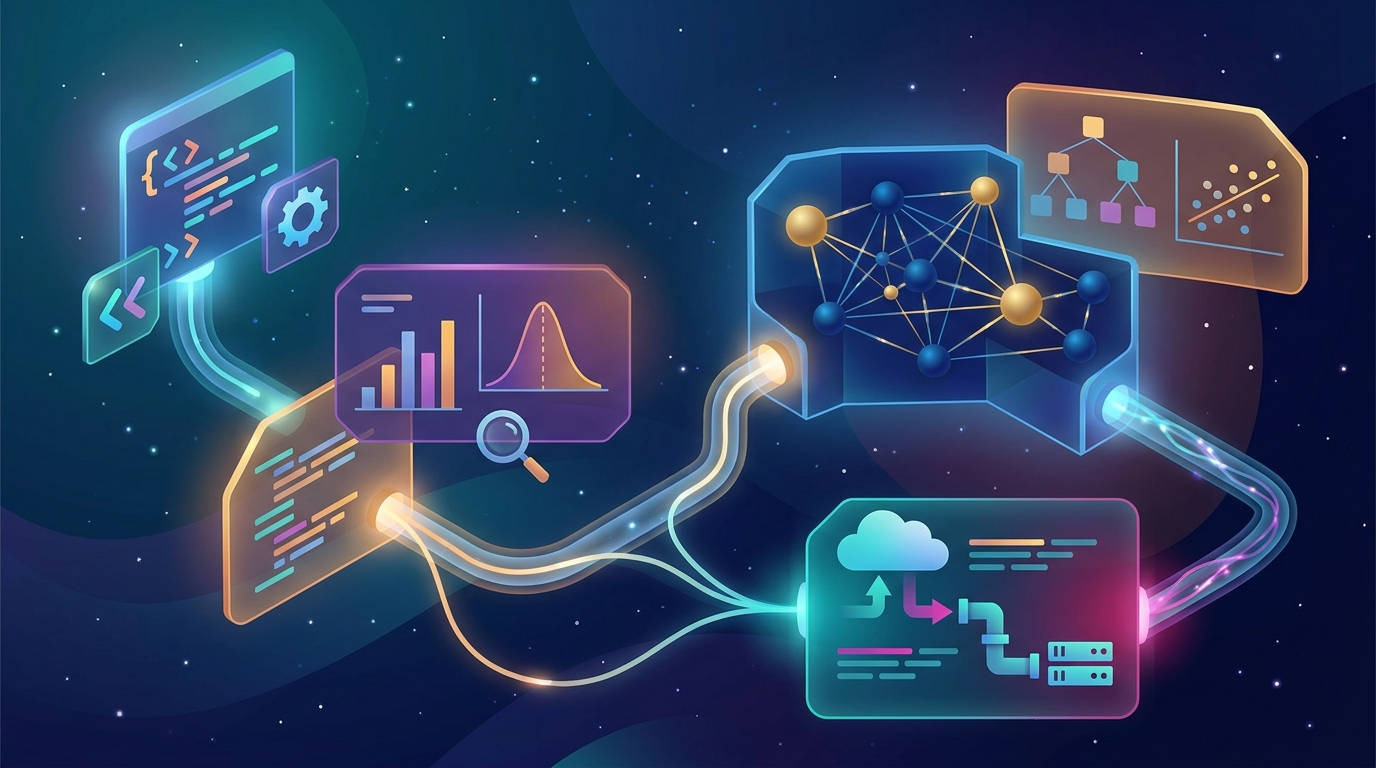
“Learning Python for data science” is not the same as learning Python for web development or automation. You can safely skip large parts of general-purpose Python and focus on the data stack. In practice, the role breaks into four repeatable activities:
- Collect & clean: load data from CSVs, databases, or APIs and fix missing or messy values (pandas).
- Explore & analyze: compute statistics, group and aggregate, and find patterns (pandas + NumPy).
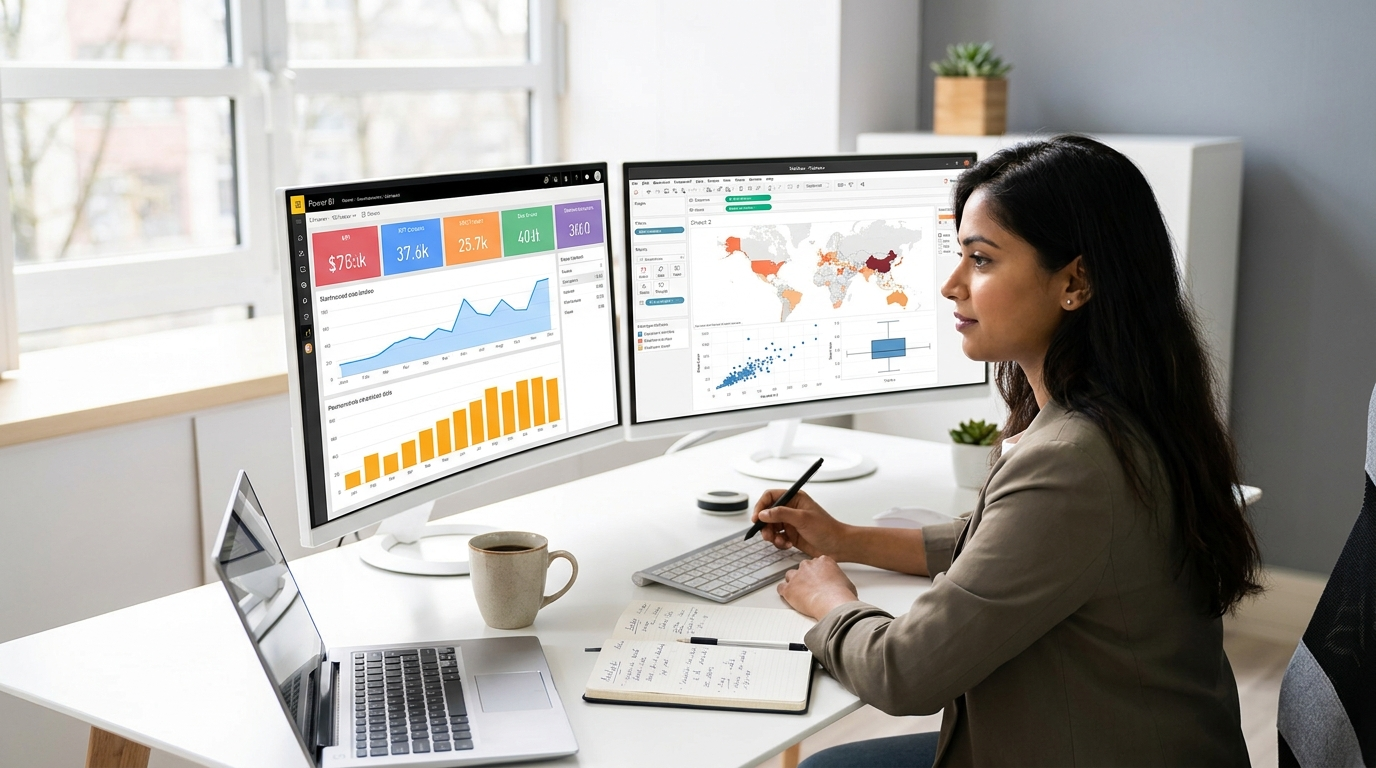
- Visualize: turn numbers into charts that tell a story (Matplotlib, Seaborn, Plotly).
- Model & predict: build machine learning models that forecast or classify (scikit-learn, then TensorFlow/PyTorch).
The 2026 Python for data science roadmap (beginner to job)
This is the exact sequence we recommend to learners on Tutorac. Each phase builds on the last, so resist the urge to jump ahead to machine learning before you can confidently manipulate a pandas DataFrame.
| Phase | What you learn | Key tools | Typical duration |
|---|---|---|---|
| 1. Core Python | Variables, data types, loops, functions, list/dict comprehensions, files | Python standard library | 3–4 weeks |
| 2. Data manipulation | Arrays, DataFrames, cleaning, merging, grouping, aggregation | NumPy, pandas | 4–6 weeks |
| 3. Visualization & EDA | Plotting, exploratory data analysis, telling data stories | Matplotlib, Seaborn, Plotly | 2–3 weeks |
| 4. Statistics & ML | Distributions, hypothesis testing, regression, classification, clustering | SciPy, scikit-learn | 6–8 weeks |
| 5. Projects & deployment | End-to-end projects, SQL, Git, notebooks, basic deployment | Jupyter, Git, SQL, Streamlit | 4–6 weeks |
Phase 1 — Master core Python first
Spend three to four weeks on fundamentals: variables, strings, lists, dictionaries, loops, conditionals, functions, and reading/writing files. You do not need decorators, threading, or object-oriented design patterns to begin. Aim to comfortably write a 30–50 line script that reads a file and prints a summary.
Phase 2 — NumPy and pandas (the real workhorses)
This is where data science begins. NumPy gives you fast numerical arrays; pandas gives you the DataFrame, the single most important object you’ll touch daily. Learn to load CSVs, handle missing values, filter rows, create new columns, and use groupby to aggregate. Most working data scientists spend the majority of their time here, not on modeling.
Phase 3 — Visualization and exploratory data analysis
Learn Matplotlib for control and Seaborn for fast, attractive statistical charts. The goal is exploratory data analysis (EDA): the disciplined habit of plotting distributions and relationships before you model anything. A strong EDA notebook is often what impresses an interviewer most.
Phase 4 — Statistics and machine learning
Add the statistics you actually use—mean, variance, correlation, distributions, and hypothesis testing—then move into scikit-learn for regression, classification, and clustering. Understand the train/test split, overfitting, and evaluation metrics. Only after you’re comfortable here should you explore deep learning with TensorFlow or PyTorch.
Phase 5 — Projects, SQL, Git and a portfolio
Theory fades; projects stick. Build 3–5 end-to-end projects, version them on GitHub, and add SQL (every data job expects it). This phase converts learning into interviews.
Essential Python libraries for data science
You can be productive with just five libraries. Learn these deeply before collecting more tools.
| Library | What it’s for | When you’ll use it |
|---|---|---|
| NumPy | Fast numerical arrays and math operations | Underlies almost everything else |
| pandas | Loading, cleaning, and analyzing tabular data | Every project, every day |
| Matplotlib / Seaborn | Charts and statistical visualization | Exploratory analysis and reporting |
| scikit-learn | Classic machine learning models & evaluation | Prediction, classification, clustering |
| TensorFlow / PyTorch | Deep learning and neural networks | Advanced AI, images, text, LLMs |
How long does it take to learn Python for data science?
The honest answer depends on your hours per week and your starting point. These are realistic ranges for someone starting from zero:
| Study commitment | Time to job-ready basics | Best for |
|---|---|---|
| 5–6 hours/week (casual) | 8–12 months | Working professionals upskilling slowly |
| 8–12 hours/week (steady) | 4–8 months | Most career switchers |
| 20+ hours/week (intensive) | 3–4 months | Full-time learners / bootcamp pace |
The fastest learners almost always have one thing in common: a mentor or tutor who reviews their code and unblocks them quickly, instead of losing days to a single error.
Python for data science skills, jobs, and salaries
Python is the gateway to several distinct roles. The same core skills branch into different career tracks:
| Role | Core Python skills used | Approx. entry salary (US / India) |
|---|---|---|
| Data Analyst | pandas, SQL, visualization | $60k–$85k / ₹5–9 LPA |
| Data Scientist | pandas, scikit-learn, statistics | $95k–$130k / ₹8–15 LPA |
| Machine Learning Engineer | scikit-learn, TensorFlow/PyTorch, Git | $110k–$150k / ₹10–20 LPA |
| Data Engineer | Python, SQL, pipelines, cloud | $100k–$140k / ₹8–18 LPA |
Salary figures are approximate 2026 ranges and vary widely by city, company, and experience.
Python vs R for data science: which should you learn?
For most learners in 2026, the answer is Python. R remains excellent for pure statistics and academic research, and you’ll see it in some biostatistics and econometrics teams. But Python wins on versatility: it covers data analysis, machine learning, deep learning, automation, and production deployment in one language, and the overwhelming majority of industry job postings ask for it. If your goal is employability across the broadest range of companies, start with Python and treat R as an optional second language.
5 Python data science projects that get you hired
Recruiters skim portfolios in seconds. These project types signal real, job-ready ability:
- Exploratory data analysis on a real public dataset (e.g., sales, housing, or health data) with clean visualizations and written insights.
- Predictive model using scikit-learn—predict customer churn, house prices, or loan defaults—with proper train/test evaluation.
- Data cleaning pipeline that takes a messy raw file and outputs an analysis-ready dataset.
- Interactive dashboard built with Streamlit or Plotly Dash that lets a non-technical user explore your results.
- End-to-end mini-project that pulls data from an API, analyzes it, and presents a recommendation.
Document each project with a clear README explaining the problem, your approach, and the result. That narrative is often worth more than the code itself.
The fastest way to start: learn with a Tutorac tutor
Self-study works, but the learners who finish fastest pair structured content with a human who answers questions in real time. On Tutorac you can find an expert Python and data science tutor for one-on-one guidance, or work through a self-paced program in our video courses library. For the bigger career picture, see our guide on how to become a data scientist in 2026 and explore the rest of our Python tutorials and guides. If machine learning is your end goal, our online machine learning course guide shows the next step.
Frequently asked questions
Is Python good for data science?
Yes—Python is the most widely used language in data science. Its readable syntax, massive library ecosystem (NumPy, pandas, scikit-learn), and central role in AI make it the default choice for analysts, data scientists, and machine learning engineers in 2026.
How long does it take to learn Python for data science?
With steady effort of 8–12 hours per week, most beginners reach a job-ready level in 4–8 months. Intensive full-time learners can do it in 3–4 months, while casual part-time learners may take 8–12 months.
Which Python libraries are essential for data science?
Five libraries cover almost everything: NumPy (numerical arrays), pandas (data analysis), Matplotlib/Seaborn (visualization), scikit-learn (machine learning), and TensorFlow or PyTorch (deep learning). Learn the first four deeply before moving on.
Can I learn Python for data science on my own?
Yes, but a tutor or mentor dramatically speeds things up by reviewing your code and unblocking errors that can otherwise cost days. A blended approach—structured content plus one-on-one help—has the highest completion rate.
Do I need to be good at math to learn Python for data science?
You need working knowledge of statistics and some linear algebra, but not advanced math to start. You can learn the necessary statistics alongside Python; most concepts become intuitive once you apply them to real data.
Python vs R for data science—which is better?
Python is the better choice for most learners because it spans analysis, machine learning, and production. R excels in academic statistics. If you want the widest job opportunities, start with Python.
Start your Python for data science journey today
The roadmap is clear: master core Python, get fluent in NumPy and pandas, learn to visualize, add machine learning, and ship projects. Don’t learn alone—connect with a Tutorac Python tutor or browse our data science video courses and turn this roadmap into a career.
Continue learning
About the author
The Tutorac Editorial Team brings together experienced instructors and working tech professionals who teach and mentor on Tutorac. We publish practical, up-to-date guides to help learners pick the right courses, certifications, and career paths. Find a tutor or explore courses.










Add a comment